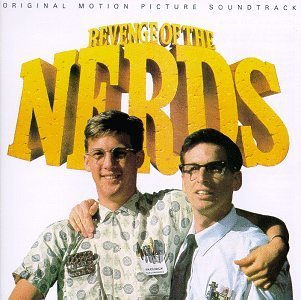
 Forget the Michigan Cool Cities Initiative. Let's have a Nerd Cities Initiative!
This is an idea that's been brewing in the back of my head for a while now. Tongue-in-cheek humor aside, I don't think that there is anything wrong with the idea of the Cool Cities thing. In fact it's a great framework. But I also think it needs a second layer. After all where would the cool kids be if they didn't have nerds to help them with their homework (and provide jobs for them after the football stardom fades or the acting career doesn't pan out).
Honestly, a lot of the stuff a
Nerd Cities Initiative might entail is probably being done ala carte. But if some bright state think tank or development agency can scoop up all those little projects and line them up so they help one another out there might be a certain synergy that comes from that. Having a snappy branding tag that fits nicely with the Cool Cities brand makes voters smile isn't bad either. Don't get me wrong, this is serious business. Other communities have started their own Nerd Cities - like projects.
Just a few days ago Australia announced a multibillion -dollar
"brain city" project earmarked for construction on Brisbane's western fringe. They hope it will attract up to 4500 elite scientists from around the world. This ambitions project is meant to be a whole new township that they hope will have a population of up to 10,000 and will include shopping centres, accommodation and commercial towers, parks and bikeways, schools and a community library. Talk about terraforming.

It actually reminds me of that
Eureka show on the SciFi Channel.
Of course there is no need to build up a city from scratch like that. Michigan has plenty of it's own "Brain Cities" that can be developed. Many of them are "Cool Cities."
So how does one go about transforming a community onto a "Nerd City?" Well um... that's the part of my idea that is a bit sketchy. One big thought that I had in mind is to look at the economic makeup of one of those Cool Cities and pick three brainy industries with a real future and incubate them aggressively over a period of time.

To mix my metaphors, think of it as a Goldilocks and the Three Bears scenario. Goldilocks is mobile worker / entrepeneur / whole company lost in the woods of the global economy. Suddenly she stumbles upon this cool mitten-shaped house with everything laid out for the three industries. Papa Industry is established and solid, but still has a lot of life in it. Maybe he's logistics and transport. Mama Industry is a bit smaller and younger, but is a perfect match for Papa. She might be - oh, let's say aerospace manufacturing. Now Baby Industry is still maybe a bit of an infant, but brimming with promise and real excitement. In fact, Goldilocks is really wowed by all the stuff set out for Baby. He's a superstar. But he's still Papa and Mama's child, so I'd say he probably has something to do with that civilian space transport / tourism industry I keep prattling on about. Yeah, Baby is the cool nerd that turns heads and shapes the future.
Does this whole fairy tale seem familiar somehow? Of course it does. At least parts of such a vision are already in the works in western Wayne County. Detroit Renaissance calls it
Aerotropolis.

The only thing I would add to this "Nerd City" project is a dash of "Cool Cities" in the communities in its midst - like Romulus, Sumpter or Belleville. And of course Aerotropolis needs my Baby Bear. The project should stay on track with the basics, but be bold and futuristic enough to catch real attention right away. How about attracting a satellite office or even subsidiary plant for an edgy venture like
Pioneer Astronautics or
Scaled Composites? For that matter, don't we already have some Glodilocks' in place at our bigger universities? Why not try for an expansion of that and get some kind of JPL facility in place at Aerotropolos?
Of course this fairy tale can be changed to build other kinds of Nerd Cities. And it by no means has to be as expansive as Aerotropolis. There may be Nerd Cities spontaneously emerging by themselves. Don't we have Papa Bear like industries in biotech already established in the state. Sure Pfizer got all grumpy and left, but
concerted efforts are already under way to get Mama a new Papa.
This is the difference between Cool Cities and Nerd Cities. Cool Cities is all about Jazz Clubs, Green Belts and Coffee Houses. These are all important cultural elements that make people feel like life is pleasant in a Cool City. Nerd Cities are about having a place to get to work on things that make people feel like they are at the center of that big future-making force that drives humanity. Nerd Cities are all about research labs, universities and trade schools that can place you in a great job that feels important and about living a life that inspires. They are about doing things that don't just make you say "cool," but rather make you say "wow."


